Sleep Disorders in Adolescents – Causes, Consequences and Treatment Options
Background: What Do Sleep Disorders in Adolescence Mean?
1.1 Normal Fluctuations Versus Problems Requiring Treatment
Causes: Why Do Adolescents Lose Sleep?
2.1 Biological Changes During Puberty
2.2 Psychological Stress and Comorbidities
2.3 Behaviour, Media and Everyday Life
2.4 Medical and Environmental Factors
Consequences: How Sleep Problems Affect Development and Everyday Life
3.1 Learning, Attention and School
3.2 Emotional Stability and Physical Health
Warning Signs, Distinguishing Factors and Sensible Next Steps
4.1 Common Patterns of Sleep Disturbance
4.2 When Is a Medical Assessment Important?
4.3 The Role of Parents, Friends and School
Therapeutic Approaches: What Really Helps?
5.1 Sleep Hygiene and Daily Routine
5.2 Cognitive Behavioural Therapy for Insomnia (CBT-I) in Adolescence
5.3 Chronobiological Approaches: Light, Rhythm, and Melatonin Where Appropriate
5.4 Treating Comorbidities: Considering ADHD and Depression
Treatment at the LIMES Schlossklinik Abtsee: Personalised, Evidence-Based, Practical
7.1 How Much Sleep Do Teenagers Need – and at What Point Does It Become a Cause for Concern?
7.2 Can Sleep Apps or Trackers Help?
7.3 Is Melatonin a Good Solution for Teenagers?
Background: What Do Sleep Disorders in Adolescence Mean?
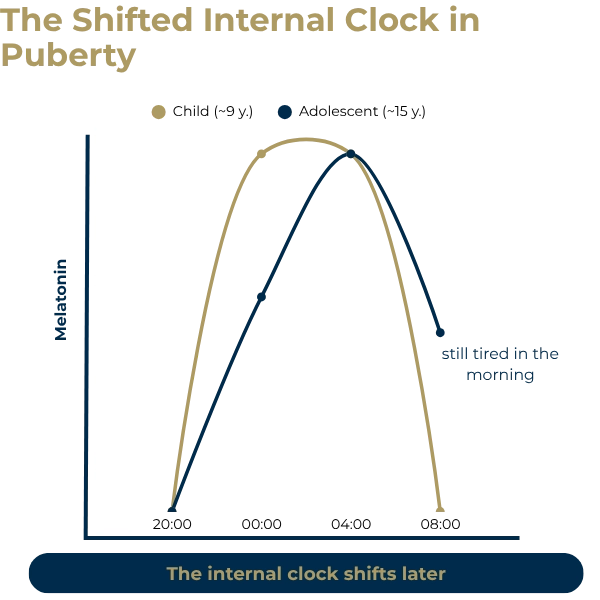
Many teenagers go through phases of falling asleep late, feeling tired in the mornings and having difficulty concentrating. Part of this is developmentally related: during puberty, the body’s internal clock shifts later, the natural urge to sleep builds up later, and early school start times often do not align with the body’s biological rhythm. Nevertheless, it is important to distinguish between temporary sleep problems and sleep disorders requiring treatment, which can have a lasting impact on health, mood and performance.
Experts refer to sleep disorders when problems falling asleep or staying asleep, pronounced daytime sleepiness, non-restorative sleep or disturbances to the sleep-wake cycle persist for several weeks and place a noticeable strain on daily life. Sleep disorders in adolescents often manifest as a combination of subjective exhaustion, reduced performance and behavioural changes. The earlier the causes are identified and systematically addressed, the more effectively long-term damage can be prevented.
Normal Fluctuations Versus Problems Requiring Treatment
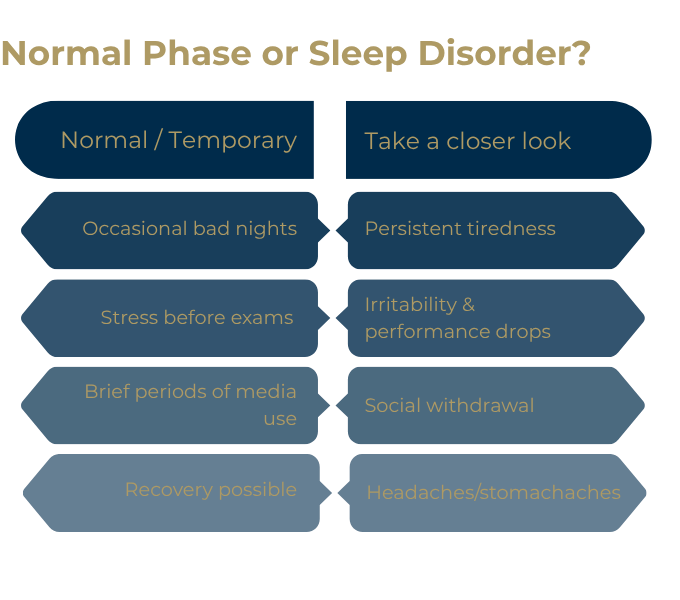
Temporary periods of restlessness before exams, a brief spell of intensive media use in the evening, or the odd night of poor sleep are not automatically signs of a disorder. Warning signs usually only emerge when symptoms recur, persist for at least three nights a week, and lead to significant limitations during the day. Typical symptoms of sleep disorders then include, amongst others:
- Persistent tiredness and exhaustion during the day
- Irritability and mood swings
- Headaches or stomach aches with no clear physical cause
- A drop in performance at school or in training
- Social withdrawal and loss of interest
Sleep disorders in adolescents should also be distinguished from other phenomena, such as normal puberty-related ‘night owl’ behaviour or disruptions to the body’s internal clock, such as delayed sleep-wake phase disorder. Careful assessment helps to clarify which next steps are appropriate.
Causes: Why Do Adolescents Lose Sleep?
Sleep is a delicate interplay of biological processes, psychological factors and everyday habits. In the case of adolescents, there is the added factor that their bodies and brains are undergoing a period of intense development. This results in a particular vulnerability to influences that can disrupt sleep – ranging from hormonal changes and media consumption to school-related stress.
The causes are rarely found in just one area. Often, several factors interact and reinforce one another. An objective analysis of the triggers forms the basis for effective therapeutic approaches that are tailored to the individual situation and can be implemented in everyday life.
Biological Changes During Puberty
During puberty, the natural rhythm of many adolescents shifts later in the day. Melatonin, a hormone that promotes sleep, is released later. Those who, for biological reasons, only feel tired late in the day find early school start times particularly difficult. In addition, a growth spurt temporarily increases energy requirements and can alter the need for rest. Such shifts are common, but can lead to persistent sleep disturbances when combined with everyday stress.
Psychological Stress and Comorbidities
Emotional stress, anxiety and depressive moods have a noticeable impact on the ability to fall asleep and stay asleep. The link between sleep disturbances and depression is well documented; anxiety disorders or panic attacks often first occur at night. There is also a link between ADHD and sleep disorders is also significant. In such cases, it is important to take the patient’s overall mental health into account.
Sleep problems particularly often interact with these stressors:
- Depression
Low mood, rumination and lack of motivation worsen sleep – and poor sleep exacerbates depressive symptoms.
- Anxiety disorders
Anxiety and panic attacks often first manifest at night, making it difficult to fall asleep and stay asleep. - ADHD
Restlessness, difficulty winding down and irregular sleeping patterns are typical and can exacerbate academic and social pressures.
Behaviour, Media and Everyday Life
Unhealthy sleep habits are a common contributing factor. These include, in particular:
- Long afternoon naps
- Irregular bedtimes and wake-up times
- Extensive screen time right up until just before bedtime
- Caffeine in the evening (coffee, energy drinks, caffeinated soft drinks)
The short-wavelength light emitted by smartphones, tablets and laptops signals ‘daytime’ to the brain and delays the onset of sleepiness. Unstructured evening routines and a lack of clear boundaries between school, leisure time and bedtime can also exacerbate sleep disorders in young people.
Medical and Environmental Factors
Chronic pain, allergies causing night-time itching or a blocked nose, respiratory problems, and night-time noise pollution can significantly disrupt sleep. Less common causes include sleep-related breathing disorders, parasomnias (e.g. sleepwalking) or neurological disorders. A medical assessment is advisable if there are indications of such causes.
Find out more about the areas we specialise in for mental health conditions in adolescence.
Consequences: How Sleep Problems Affect Development and Everyday Life
Insufficient or non-restorative sleep affects almost every area of life. In young people, this primarily affects:
- Concentration and memory
- Motivation and drive
- Emotional regulation and mood
- Physical health and resilience
Symptoms of sleep disorders are not always recognisable as such at first glance: ‘laziness’ or irritability may mask performance slumps caused by exhaustion. Mental health is also highly sensitive to this. The close link between sleep disorders and depression is evident, amongst other things, in persistently low mood, loss of interest and social withdrawal. An early assessment helps to prevent secondary problems from becoming entrenched in the first place.
Learning, Attention and School
Sleep consolidates what has been learnt and enhances concentration. Too little or restless sleep can therefore lead to poor concentration, ‘brain freezes’ during exams and fluctuating academic performance. Young people often report feeling ‘brain fog’ in the morning and extreme tiredness in the afternoon. These symptoms of sleep disorders have a noticeable impact on everyday school life.
Emotional Stability and Physical Health
A lack of sleep can lead to irritability, mood swings and impulsive behaviour. In those who are susceptible, anxiety or depressive symptoms may be exacerbated. It is not uncommon for a vicious circle to develop: sleep problems worsen one’s mood, and this low mood in turn encourages further night-time rumination. Thus, in many cases, sleep disorders and depression are linked.
Furthermore, sleep is important for the immune system, metabolism and recovery. Persistent sleep deprivation increases the risk of infections, headaches or gastrointestinal complaints; it also raises the risk of accidents, for example on the roads or whilst playing sport. Therefore, symptoms of sleep disturbances should be taken seriously and not simply dismissed as a ‘phase of puberty’.
Warning Signs, Distinguishing Factors and Sensible Next Steps
A helpful guideline: if problems falling asleep or staying asleep, excessive daytime sleepiness or a completely disrupted sleep-wake cycle persist for longer than three to four weeks and noticeably disrupt daily life, a professional assessment is advisable. This is particularly true if depressive or pronounced anxiety symptoms also occur, if there is a decline in performance, or if parents and teachers notice significant changes.
A consultation with a doctor or psychotherapist can help determine whether a disorder requiring treatment is present. A sleep diary, details of daily routine, media consumption, caffeine intake, physical activity and any indications of psychological stress are useful for assessment. Often, a structured consultation is sufficient to identify patterns and initiate targeted changes.
Common Patterns of Sleep Disturbance
During adolescence, the main issues are difficulty falling asleep and staying asleep (insomnia), a disrupted sleep-wake cycle, and parasomnias. The contrast between ‘sleeping in’ at the weekend and getting up very early on school days can also disrupt the body’s internal rhythm. Sleep disorders in adolescents are therefore less often caused by ‘not getting enough sleep’ on individual nights, but rather by consistently inappropriate sleep times and maladaptations resulting from habitual patterns.
When Is a Medical Assessment Important?
A medical assessment is particularly advisable if physical symptoms or pronounced nocturnal abnormalities occur:
- Snoring with pauses in breathing
- Severe night-time restlessness
- Persistent nightmares
- Sleepwalking with a risk of injury
- Unexplained night-time pain
The same applies if, in addition to sleep problems, there are symptoms of depression, severe anxiety, changes in weight or substance use. Depending on the findings, further investigations (e.g. blood tests, allergy testing, and, in rare cases, sleep medicine tests) may be helpful.
The Role of Parents, Friends and School
Parents, relatives and teachers can provide attentive support and help alleviate the burden. The following are particularly helpful:
- Observe closely and provide feedback
Address any changes without passing judgement, and discuss together what might help.
- Develop a structure together
Establish reliable routines and provide realistic relief in everyday life, rather than building up pressure. - Avoid placing blame
Insinuations such as ‘You just don’t want to’ don’t help; a cooperative, solution-focused approach is better.
If you are unsure whether professional help is needed, even an initial consultation with specialists can provide guidance.
Find out how the admission process works at the LIMES Schlossklinik Abtsee.
Therapeutic Approaches: What Really Helps?
Effective treatment is tailored to the individual’s specific pattern: causes, maintaining factors and goals are clarified together. Treatment often begins with sleep hygiene and behavioural therapy measures, supplemented by educational, family-based or medical components. In cases of significant co-occurring mental health conditions – such as ADHD and sleep disorders, or the interplay between sleep disorders and depression – both are systematically treated.
Medication plays a secondary role in adolescents and, if used at all, is employed in a targeted and time-limited manner. Evidence-based psychotherapy, particularly cognitive-behavioural therapy, as well as chronobiological strategies (light, rhythm, and, where appropriate, melatonin following medical assessment) have proven effective. It is crucial that measures are practical for everyday life and are implemented consistently.
Sleep Hygiene and Daily Routine
Sleep hygiene refers to the conditions and habits that support restful sleep. It is not a ‘miracle cure’, but often forms the basis for further steps. It is important to adapt recommendations to the individual’s specific life situation.
- Stable routines with gentle adjustments
Keeping bedtimes and wake-up times as consistent as possible, even at the weekend, supports the body’s natural rhythm. If the rhythm has shifted, gradually bringing the times forward helps.
- Evening routine without screen time
Avoid bright, close-up screen light for at least 60 minutes before bed; instead, opt for calming activities such as reading, listening to soft music or doing relaxation exercises.
- Keep caffeine intake low
After early afternoon, avoid energy drinks, coffee or soft drinks with high caffeine content where possible.
- Optimise your sleeping environment
Make it quiet, dark, cool and comfortable for you; use the bed primarily for sleeping. - Use naps sparingly
If necessary, keep them short (max. 20 minutes) and avoid taking them too late in the day.
Cognitive Behavioural Therapy for Insomnia (cbt-i) in Adolescence
The cognitive behavioural therapy for problems falling asleep and staying asleep (CBT-I) is considered effective, including in adolescents. It combines techniques such as sleep restriction (temporarily limiting time spent in bed), stimulus control (associating the bed with sleep), cognitive strategies to combat rumination, and psychoeducational elements. Relaxation techniques (e.g. breathing exercises, progressive muscle relaxation) are used as a complement. The aim is to establish a robust, predictable sleep rhythm and to develop constructive ways of dealing with sleep-related worries.
Chronobiological Approaches: Light, Rhythm, and Melatonin Where Appropriate
Targeted exposure to light in the morning can bring the body’s internal clock forward. In cases of pronounced delay, this is combined with regular wake-up times, exercise in daylight and an evening routine without bright light. In individual cases, melatonin may be considered following medical assessment. The decision depends on age, severity, comorbidities and previous experience; self-medication is not recommended.
Treating Comorbidities: Considering Adhd and Depression
When ADHD and sleep disorders occur together, structure, limiting stimuli in the evening and clear routines should be planned with particular care. Depending on the situation, medication for ADHD may be adjusted or supplemented to reduce night-time restlessness. Similarly, if there are signs of a depressive episode, it is advisable to treat sleep and mood in parallel. This helps to break the vicious cycle, thereby reducing the symptoms of sleep disorders and low mood.
Treatment at the Limes Schlossklinik Abtsee: Personalised, Evidence-based, Practical
At the LIMES Schlossklinik Abtsee , young people with severe or complex sleep problems receive comprehensive diagnostic and therapeutic support. The process begins with a thorough psychiatric, psychological testing and psychosomatic assessment, which systematically evaluates sleep patterns, comorbidities (e.g. ADHD and depression), physical factors and everyday circumstances. An individualised treatment plan is then drawn up on this basis.
Depending on the assessment, high-frequency psychotherapy in individual and group settings, behavioural and psychodynamic approaches, as well as systemic approaches involving the parents, are used. These are complemented by relaxation techniques, mindfulness, sports and exercise therapy, art and music therapy, yoga where appropriate, and a structured daily routine. In cases of difficult school experiences, support provided alongside schooling may be beneficial. The round-the-clock presence of doctors and nursing staff ensures safety and reliability.
The specific combination of interventions is tailored to individual goals, strengths and challenges. Common components include:
- Psychoeducation on sleep and the body’s internal clock
Understanding what perpetuates the symptoms creates scope for action.
- CBT-I elements and chronotherapy
Stimulus control, sleep restriction, light therapy and fixed routines.
- Treatment of comorbid conditions
Structured therapy for ADHD and depression to break the cycle of mutual reinforcement. - Resource-building
Sport, creative therapies and social skills training strengthen self-efficacy and stability.
FAQ
How Much Sleep Do Teenagers Need – and at What Point Does It Become a Cause for Concern?
Most teenagers need around 8 to 10 hours of sleep. However, the key factor is how rested they feel and how consistent their daily performance is. The situation becomes critical if, over several weeks, there is noticeable tiredness, irritability and a decline in performance, or if they regularly only manage to fall asleep well after midnight and their daily life suffers as a result. In such cases, a professional assessment is advisable.
Can Sleep Apps or Trackers Help?
Apps and trackers can give you a sense of your sleep patterns and habits. However, the data is often inaccurate and is no substitute for a professional diagnosis. Simple sleep diaries that record bedtimes, wake-up times, naps, caffeine intake and screen time are useful. If symptoms persist, a professional assessment should be sought.
Is Melatonin a Good Solution for Teenagers?
Melatonin can help in certain cases, particularly where there is a significant shift in the sleep-wake cycle. However, it should only be used following medical consultation, in the correct dosage and at the right time. The first line of treatment should be measures relating to sleep hygiene, behavioural therapy and chronobiology. Self-medication is not recommended.